Orchard Pollination
Drone-Assisted Apple Orchard Pollination
On April 26, 2025, in Huan Cui District, Weihai City, an innovative pollination operation unfolded in the apple orchards of Henan Zhuang Village. A T280 fuel-powered drone from Shitian Aviation soared between the rows of apple trees, delivering a “sweet gift” of pollen to the snow-white blossoms. This marked the orchard’s first use of drone-based pollination, signaling a major step forward for smart agriculture in apple cultivation.
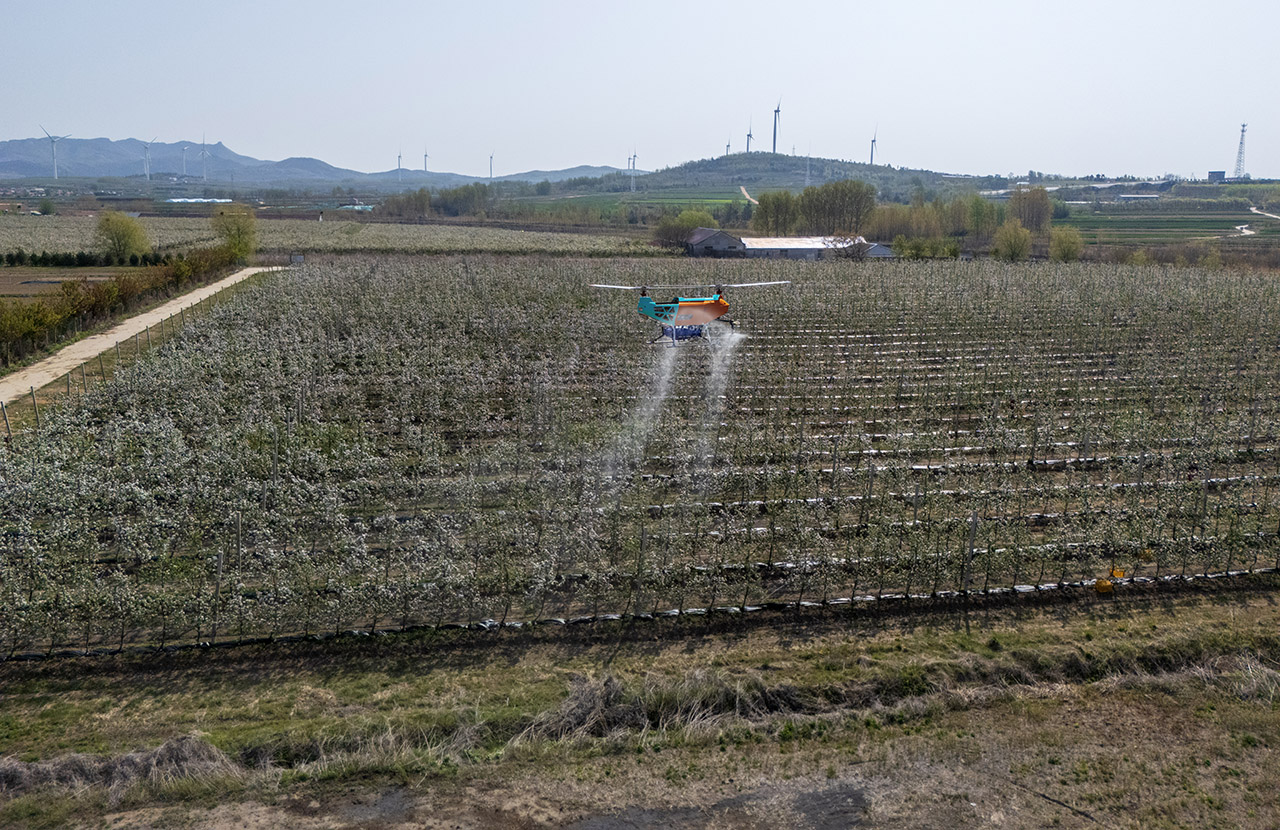
T280 fuel-powered drone performing precision apple blossom pollination
Precision Pollination Process
Under the guidance of technical specialists, prepared pollen solution is loaded into the drone’s spray system. Following a pre-programmed flight path at an altitude of approximately 10 meters, the T280 evenly disperses pollen across the blossoms. The drone’s downward rotor airflow ensures that the pollen adheres effectively to the stigmas, significantly increasing pollination success rates.
- Automated Precision: Pre-set flight paths ensure complete coverage across orchard rows.
- Enhanced Adherence: Downward airflow from rotors improves pollen attachment efficiency.
- Optimized Dispersion: Uniform spray application minimizes over- or under-pollination.
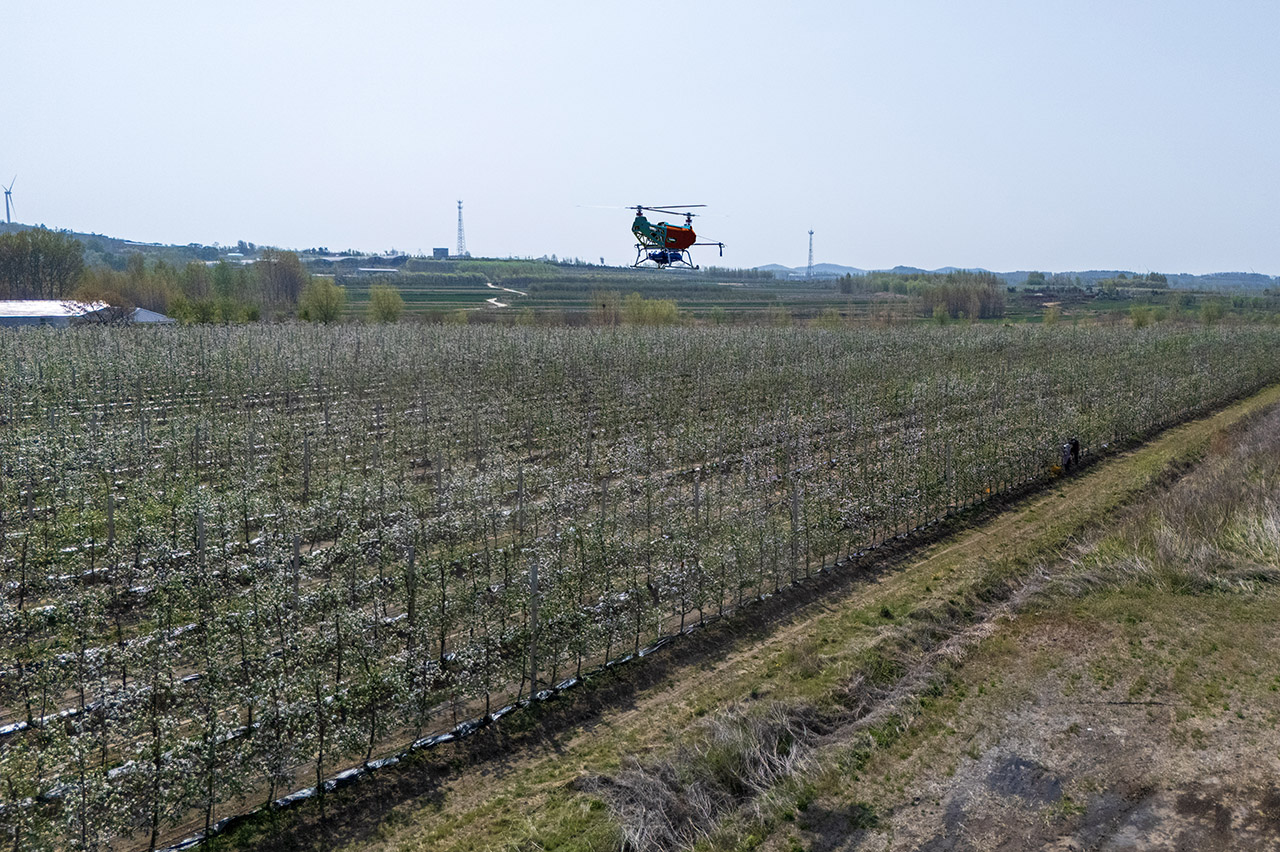
T280 drone spraying pollen solution evenly over apple blossoms
Advantages Over Manual Pollination
Compared to traditional hand pollination, drone-assisted methods deliver substantial benefits:
- Massive Efficiency Gains: One worker can manually pollinate 8–10 acres per day; the drone completes 50 acres in just 12 minutes.
- Uniform Coverage: Drones ensure even pollen distribution across all blossoms.
- Cost Reduction: Service costs are only one-fifth of manual labor, reducing long-term pollination expenses by 30–50%.
Boosting Yield and Quality
According to Dr. Duan from Qingdao Agricultural University, drone pollination not only addresses labor shortages and rising wages but also improves yield and fruit quality. Orchards adopting this technology are expected to achieve:
- 15–20% increase in apple production
- Improved fruit size, color, and sweetness
- Reduced pollen waste and lower operational costs
Sustainability Benefits
Drone pollination supports sustainable orchard management by reducing unnecessary human traffic, minimizing disturbance to trees and soil, and conserving pollen resources. These improvements contribute to long-term orchard health and environmental protection.
Future Smart Agriculture Integration
The orchard plans to expand its smart farming initiatives beyond pollination. Upcoming projects include:
- Intelligent irrigation systems
- Disease and pest monitoring with early warning alerts
- Comprehensive smart orchard management platforms
The successful deployment of drone pollination not only benefits local farmers but also offers a replicable model for the wider apple industry. As smart agriculture technologies continue to evolve, more orchards will be able to harness these innovations, accelerating the modernization of agriculture.